Meet your MEC: Zubaria Iram, MD
Feb. 8, 2026‘I am honored to serve as a bridge’
By: Emily Sweet, Internal Communications Lead
In this series, we’ll meet members of the Medical Executive Committees (MECs) at Salem and West Valley hospitals so you can get to know the people behind these leadership roles. Next up, West Valley Hospital Medical Staff President Zubaria Iram, MD. Dr. Iram specializes in hospital medicine.

Q: What does it mean to you to be Medical Staff President for West Valley Hospital?
A: Serving as a medical staff president at West Valley Hospital, a critical access hospital, comes with the responsibility of upholding quality of care and patient safety standards in a resource-limited environment. I am honored to serve as a bridge between the providers and the hospital administration and board of trustees, to ensure much-needed services are maintained for the local community.
Q: What made you want to specialize in hospital medicine?
A: Hospital medicine is generalism at the highest level. As a hospitalist, you're not the expert on a particular organ system, but a person who understands how the heart, lungs, kidneys, medications and social context collide to create a perfect storm. I take pride in looking at my patients holistically. I’m able to guide them through their most vulnerable time, when they're brought into an unfamiliar environment and are most in need of treatment with dignity, validation and respect.

Q: What do you want most for your patients?
A: I want to ensure my patients are equipped with the tools and information they need to get their health back on track once they leave the hospital. While I won't necessarily be seeing them again, my desire is to ensure they are successful on their health journey in the community.
Q: Why are you a doctor?
A: From early on, I was drawn to human complexity and enjoyed the breadth of information there is to learn about the human body and mind. In practice, I value the impact and responsibility doctors have, knowing their work and decisions have lasting real life consequences on the lives of their patients. The satisfaction I get from my work lends even more meaning to this fulfilling life, and I am grateful for the opportunity to be a part of the physician community.
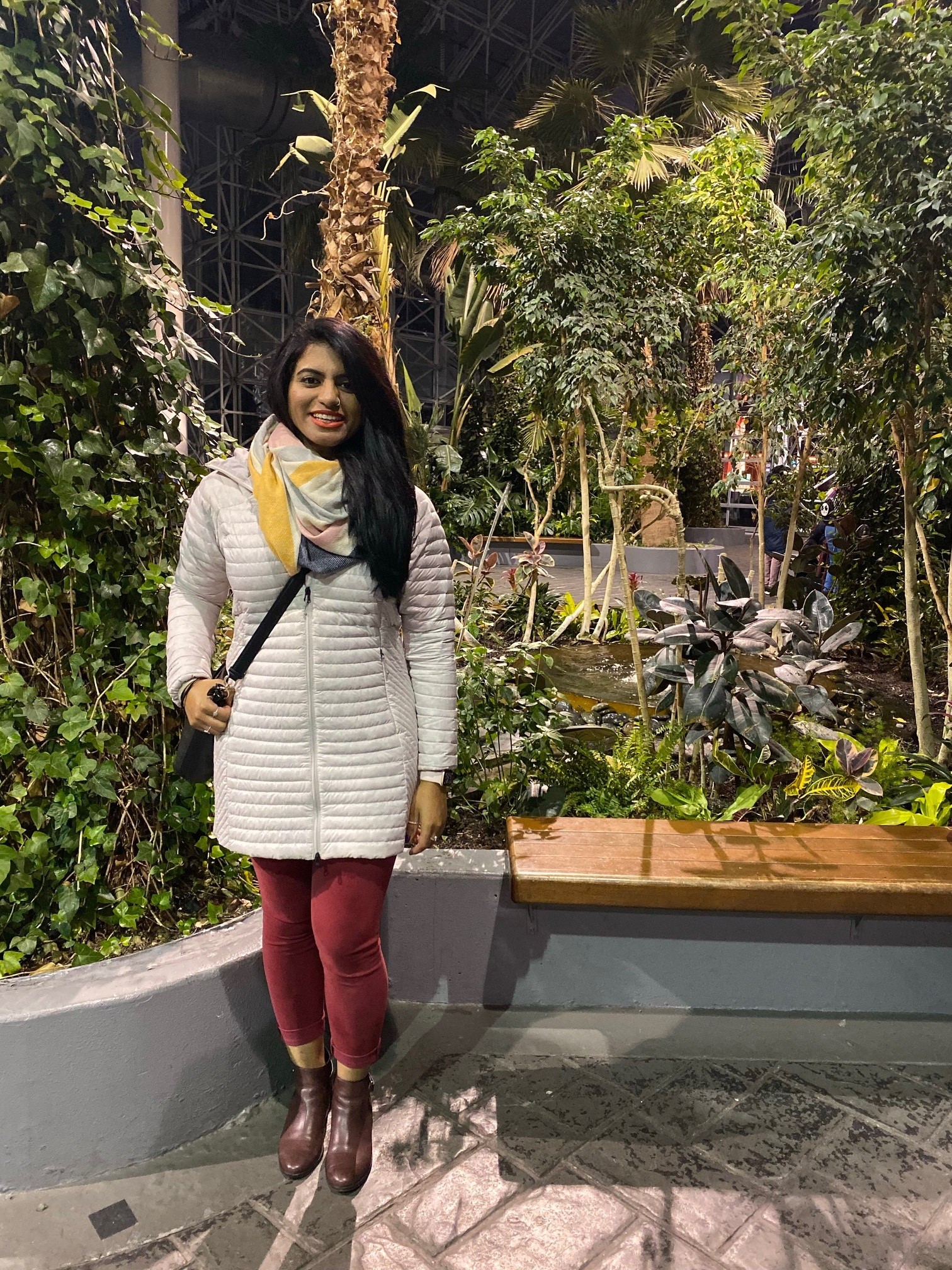
Q: You enjoy the culinary arts. What’s a favorite recipe you made recently?
A: I generally enjoy dabbling in a variety of cuisines in my kitchen. However, since I recently became a mom, I've gained immense appreciation for time-efficient one-pot recipes that allow me to devote precious time toward many other competing priorities. For that reason, I love making “Mahshi,” which is a Middle Eastern take on stuffed vegetables, typically stuffed with spiced ground meat and rice, cooked in a lemony tomato broth. It's super easy to make yet remarkably delicious!
Q: You also enjoy gardening. What should we add to our beds this year?
A: I love growing herbs and Roma and cherry tomatoes that I can use in my cooking. It is so satisfying stepping outside and snipping some stalks of fresh mint, sage, thyme or cilantro and adding it to whatever's cooking for the day.
Q: And you love to travel! What place has really stuck with you and why?
A: One of the most special places from all my travels that I hope to revisit again someday is Montreux-Vevey, a small lakeside town in Switzerland. Despite having been there almost two decades ago, I clearly remember the serenity its picturesque placement between Lake Geneva and the Swiss Alps offered. Taking in the panorama and breathing the crisp fresh air while sitting on top of a hill looking down at the lake and mountains beyond the horizon, the mind and time slows down and creates the perfect setting for reflection.

Q: What are you reading?
A: I recently read “The Midnight Library” by Matt Haig, which delved into how our multitudes of choices in life can potentially lead to entirely new versions of our existence — but emphasizes that no single decision guarantees happiness. It challenges the idea that happiness can be achieved by a “right choice.” The book offers acknowledgement of the fact that despair or suffering is a deeply human experience, not a moral failure. And that a fulfilling life is one where we are present, have meaningful connections with others around us and accept the imperfections of our life without dwelling on what could have been. I think that message is quite relevant to the times we live in — where many around us battle with suffering that is unique to their lived experience, and without adequate social and mental health support in the community, they often feel unseen and irrelevant.

Q: What’s the best advice you ever heard?
A: “Do the right thing, even when no one benefits except your integrity.” I try to live by this every day in all aspects of my life. When we're honest with ourselves and our values are in alignment with our morals, only then can we be honest with others and gain their trust.
Thank you, Dr. Iram, for sharing with us! We look forward to speaking with our next MEC member, Salem Hospital Medical Staff President-Elect Marc Sunday, DO, in our next issue.