Do all ACL tears require surgery?
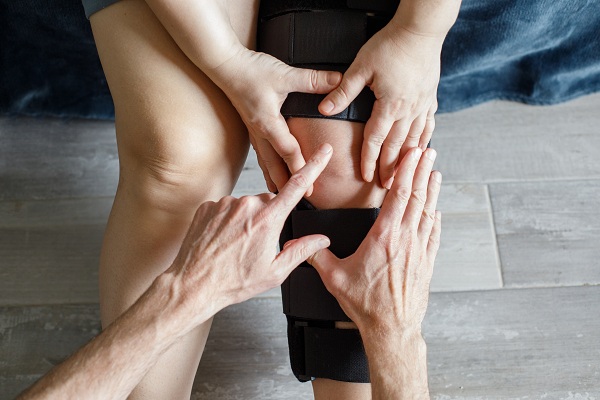
As an orthopedic surgeon at Salem Health Orthopedics specializing in sports medicine, Ognjen Stevanovic, MD, often meets with patients facing anterior cruciate ligament ( ACL) tears.
This is a ligament in the knee that’s used as a stabilizer between the thigh and the shin.
How severe is the tear?
Dr. Stevanovic said not all ACL tears require surgery. First, he looks at the severity of the tear.
Some people come in with ACL strains, which leads to inflammation from pulled fibers at the knee.
“You can also have partial tears,” Dr. Stevanovic said. “For the most part, those can be treated with rehabilitation. However, sometimes the ACL can stretch. The fibers may still be in continuity, but they are not doing their job. So, it’s like a rubber band that’s been stretched out too much. It’s not the same integrity as before.”
In general, the sports medicine surgeon said he recommends ACL reconstruction surgery for active patients who want to continue to participate in sporting activities.
Nonoperative treatment vs surgery
“It can be treated nonoperatively, however this is not very common,” Dr. Stevanovic said. “That’s a conversation to have with a patient. If the patient is older, sedentary or they don’t want to have surgery, it’s ultimately their choice.”
The ACL provides stability if a person is quickly changing direction or pace, such as when playing pickleball.
“If the patient is not involved in those activities at all, they generally have a stable knee and they don’t want surgery, I’m ok with that,” Dr. Stevanovic said.
For non-surgical treatment, Dr. Stevanovic recommends ongoing physical therapy focused on range of motion, as well as reducing inflammation and swelling within the knee.
Risks and benefits
When a patient is considering surgery, the orthopedic surgeon goes over what the process entails and what recovery looks like.
During ACL reconstruction surgery, a new ACL is made using a tissue graft from the patient’s hamstring or quadriceps, or tissue from a human organ donor.
“I discuss with them what activities they would struggle with if they don’t get the ACL reconstructed,” he said. “That’s the main discussion: what life would be like if they don’t have the surgery. If the benefits outweigh the risks, they generally come to the conclusion they would like to have this done.”
After surgery, recovery is typically nine to 12 months.
“ACL reconstruction takes time to heal, and the leg muscles and balance of the muscles need to mature enough to keep the knee protected,” Dr. Stevanovic said. “That takes at least nine months.”
Orthopedic care
Are you considering ACL surgery? Learn more about: