New technology improves outcomes for bariatric surgery patients
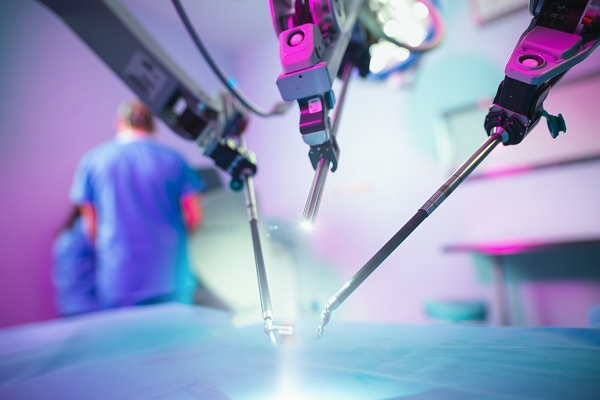
There are three Da Vinci machines now in use at Salem Hospital.
Sergio Toledo, MD, said these are just one way bariatric surgeons at Salem Health are keeping up with the latest technology. Compared to a typical laparoscopic surgery, the Da Vinci machines allow for 3D visualization.
“That makes things a little bit easier,” said Dr. Toledo. “Instead of driving a Toyota, a very good car, it’s like driving a Mercedes. There are more enhanced positions. Technical performance is better.”
Refined precision during surgery
Dr. Toledo said the robots allow for better wrist movement to help surgeons navigate tight spaces during bariatric surgery.
“With laparoscopy, you’re standing, and you usually have to have your arm across the patient,” he said. “That puts a lot of stress on your shoulders. It’s a good workout on one side. But with robotics, you’re sitting down, and this decreases the strain.”
Differences between surgery options
With both laparoscopy and robotic surgeries, the concept is the same. Surgeons use long instruments through small incisions, and a tube is used with a light source and a video camera.
“The difference is that for laparoscopy, you are handling the instruments with your hands,” said Dr. Toledo. “This is a straight stick that rotates left or right. With robotics, what happens is you put the robot that looks like a big spider on top of a tower, and those arms get attached to the instrument. Then, the surgeon gets to the side with a console to manage everything with their hands and feet to move the instruments.”
Improved patient outcomes
Ultimately, robotics leads to better precision and a reduced rate of blood transfusions. Dr. Toledo said with gastric bypasses, the technology reduces the transfusion rate by about 30%.
The bariatric surgeon said it also decreases the likelihood of an open procedure.
“When things get very complicated, the default for every surgeon is to proceed with doing a big incision, or a conversion to an open procedure, and that usually has a bigger impact in blood loss, length of stay and pain,” said Dr. Toledo. “With robots, the conversion rates for abdominal procedures have decreased dramatically compared with laparoscopy.”
This improves patient outcomes without compromising safety, Dr. Toledo said.
“Once you have better visualization and improved precision, it creates a better outcome for patients and that is what we’re all looking for,” he said. “A better outcome in a safer way, diminishing any possible complications.”